


Luxury minimalist furniture looks simple in photos, and sofas are where that simplicity is hardest to judge. Two sofas can look almost identical online while one quote comes in far higher than the other, and nothing in the listing explains what the extra money buys.
The difference is rarely visible in a photo. It sits in the frame, the foam, the cover and the stitching, along with decisions made on the factory floor that nobody photographs. For a distributor the stakes are higher than for a consumer: when a sofa fails, your customer does not call the factory. They call you.
HUAYI SPACE is a sofa manufacturer with its own brand and its own factory, and we have spent 20 years making and exporting sofas. This article explains why a minimalist sofa is hard to build well, what a higher quote should buy, how to inspect a sample, and which questions to ask a manufacturer before you place an order.
What "Luxury Minimalist" Means in a Sofa
Minimalist describes a design language: clean lines, restrained detail, a neutral palette. Luxury, in this guide, describes build quality and finish rather than a price label. A sofa can be minimalist and cheaply made, and many are.
Buyers often assume a minimalist piece is simple to make and therefore cheap. Anyone who has run a production line knows it is closer to the opposite. A traditional design has carving, piping and trim that draw the eye away from small flaws. A minimalist sofa has none of that, so every line, seam, corner and proportion is on show.
Four things minimalist design exposes
Straight lines and flat panels. A frame that is slightly out of square shows up as a leaning arm or a twisted back, and cover wrinkles have nowhere to hide on a flat surface.
Seams and pattern matching. With little ornament, a seam that drifts or a pattern that fails to line up across panels is the first thing a buyer notices.
Slim arms and low bases. Thin profiles leave less room for structure, so the frame has to be engineered to stay rigid.
Concealed legs and hardware. Hidden connectors carry the load without being seen, and weak ones tend to reveal themselves only after months of use.
For a distributor, the appeal of luxury minimalist furniture is breadth. Clean lines and neutral colors suit many customers and many interiors, which keeps stock risk manageable. That only holds if the build quality is there. Without it, "minimal" becomes "plain and flimsy."
Well-Made vs. Look-Alike: What You Can Verify
The table compares attributes you can ask about or test, rather than impressions.
|
Component |
Well-made minimalist sofa |
Typical look-alike |
|
Frame |
Kiln-dried solid hardwood or multi-layer plywood; glued, doweled or screwed joints with corner blocks |
Mixed low-grade board; stapled or glue-only joints; thin sections where load concentrates |
|
Seat foam |
High-resilience foam with density and hardness (ILD) stated in the spec |
Foam grade not stated; tends to flatten early |
|
Suspension |
Sinuous springs, hand-tied springs or webbing, evenly spaced and correctly tensioned |
Sparse springs or thin webbing; uneven feel across the seat |
|
Cover |
Abrasion and colorfastness reports; leather type named |
Color card only; leather described simply as "genuine" |
|
Seams and corners |
Straight stitching, aligned patterns, symmetrical corners |
Wavy seams; bulging or wrinkled corners |
|
Unseen areas |
Undersides and inner surfaces finished neatly |
Rough or untidy wherever nobody looks |
|
Packing |
Method agreed at the quotation stage |
Left open until a damage dispute |
Where the Money Goes: What a Higher Quote Buys
Most price gaps between two similar-looking sofas come from five areas. Ask every supplier to quote against the same written spec, otherwise you are comparing different products.
|
Cost area |
What a higher spec usually involves |
Ask for |
|
Frame |
Better-grade, properly dried wood or board; stronger joinery |
Material type, moisture control, joint method |
|
Foam and suspension |
Higher-density, more resilient foam; better-tensioned suspension |
Foam density and hardness, spring or webbing type |
|
Cover |
Tested fabric or a higher leather grade; extra material to match patterns |
Test reports, leather type, pattern-match tolerance |
|
Labor and QC |
Slower, more careful sewing and upholstery; inspection at several stages |
QC checkpoints and how they are recorded |
|
Packing and loading |
Stronger cartons, edge and corner protection, moisture protection |
Packing spec, CBM per unit, units per container |
A low quote is not automatically a bad one. But when two quotes differ sharply and the spec sheet is silent on these five points, the gap is usually being made up somewhere you cannot see. Once returns, replacement freight and your own staff time are counted, the cheaper quote can turn out to be the more expensive one.
Sofa Materials: Where the Quality Gap Starts
We tell every new colleague the same thing: look at materials first, and everything else comes second.
Frame and wood
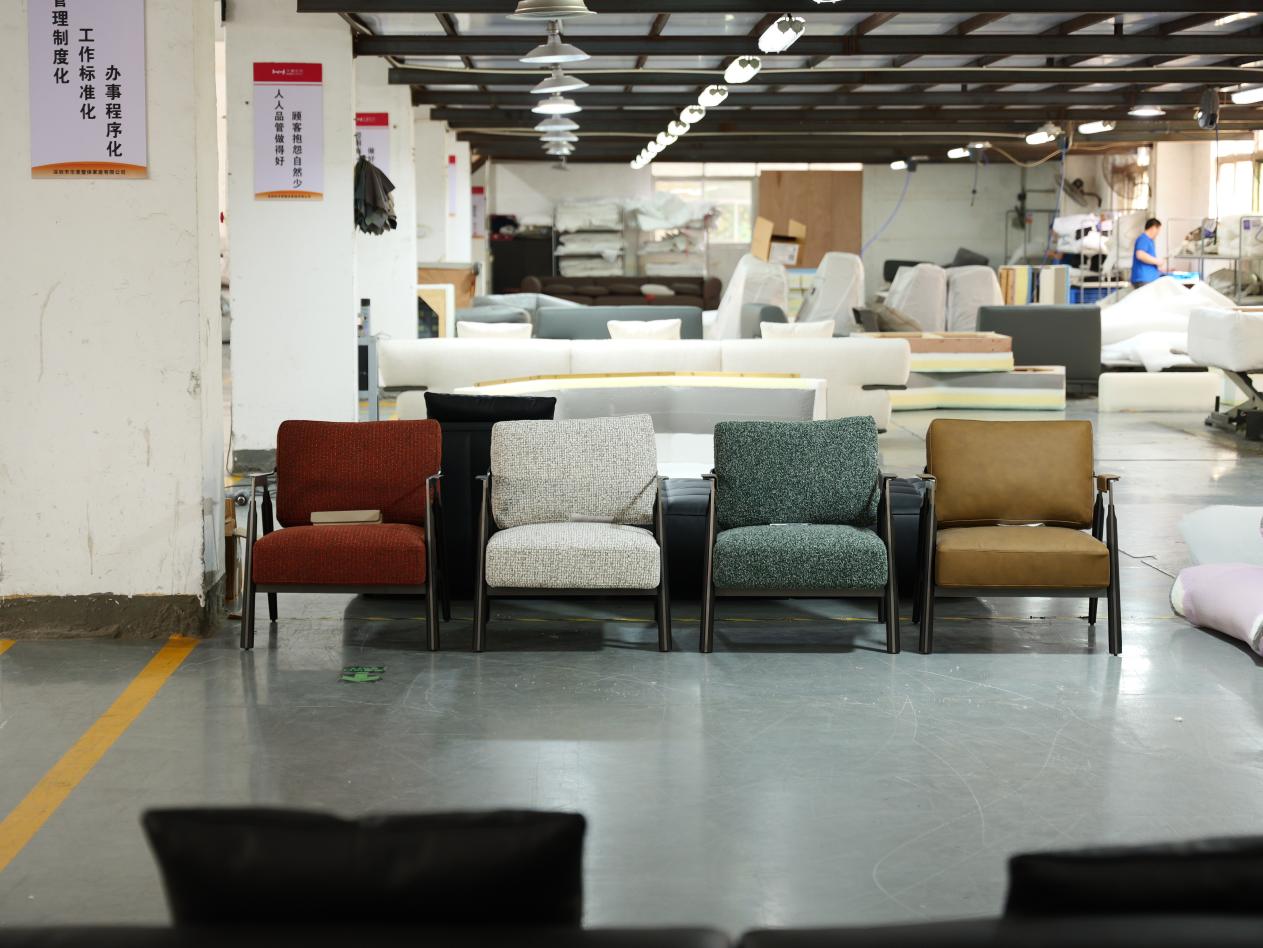
A good frame uses properly dried solid hardwood or reliable engineered board such as multi-layer plywood. Wood that was not dried enough can crack, warp or creak, particularly when a sofa moves between very dry and very humid climates, and the complaint usually arrives months after delivery, when it is hardest to resolve. Ask what the moisture target is and how it is checked. Furniture timber is commonly kept at roughly 8–12% moisture content, though the right figure depends on the destination climate. Joinery matters as much as the wood. Look for glued joints with dowels or screws and corner blocks at the stress points. A frame held together mainly by staples is a warning sign.
Foam and suspension
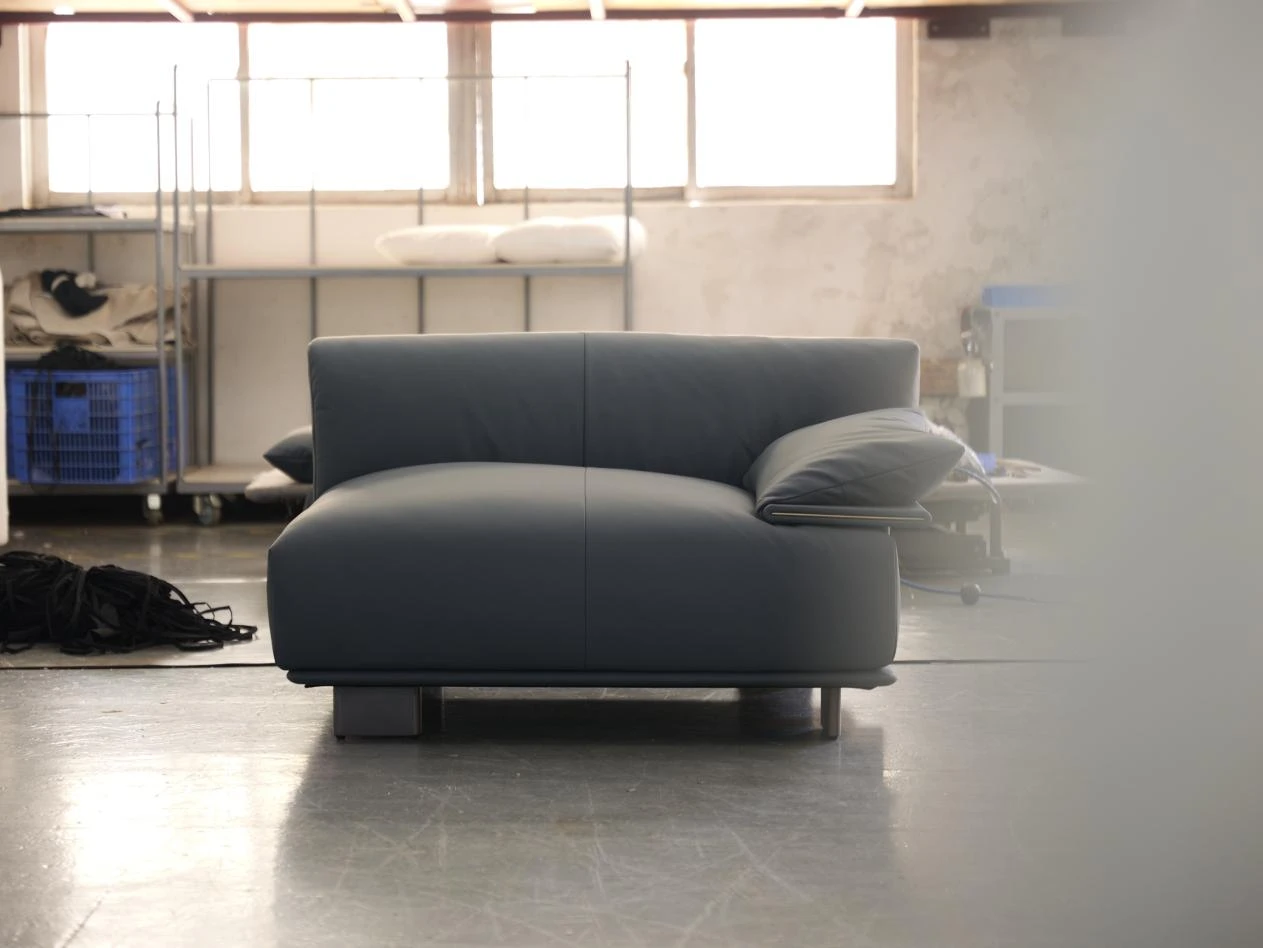
Comfort and lifespan come from what is inside and under the cushions. Ask for foam density and hardness (ILD) in writing, along with the test method; ISO 845 and ASTM D3574 are common references. For seat cushions, many buyers treat high-resilience foam of roughly 35 kg/m³ or higher as a sensible starting point for a premium sofa, then adjust for the feel and price tier they want.
Suspension can be sinuous springs, hand-tied springs or webbing; what matters is even spacing and correct tension. A fiber or down wrap over the foam also helps a minimalist cover stay smooth. A sofa that feels great in the showroom but sags after a year very often traces back to foam grade, suspension or joinery, so ask about all three.
Leather and fabric
For leather, ask exactly which type it is: full-grain, top-grain, split or bonded (reconstituted). Durability, feel and price differ widely, and "genuine leather" on its own tells you very little.
For fabric, ask for abrasion and colorfastness reports rather than a color card. Common references are ISO 12947 (Martindale abrasion), ISO 105-B02 (lightfastness) and ISO 105-X12 (rubbing fastness). For everyday domestic seating, 25,000 Martindale rubs or more is often cited as a reasonable floor, with higher figures for heavy or contract use. Light neutral fabrics also show soiling sooner, so ask about performance or stain-resistant options for family customers.
How to Inspect a Sofa Sample
Photos and videos are only a first filter. These checks work on a physical sample, and you can run them yourself or ask us to walk you through them on a video call.
Look under the cover. Ask to see a sofa with the cover removed, or a cutaway sample, so you can see the frame, foam and suspension.
Lift one end. A solid frame has noticeable weight. Weight alone proves little, so pair this with check 1.
Test the frame for movement. Press diagonally on the arms and back. A well-joined frame does not flex or creak.
Press the seat. Press hard on the cushions and watch how evenly they recover. Sit down, shift your weight and feel for dips.
Check the legs. All legs should touch the floor and the base should not rock.
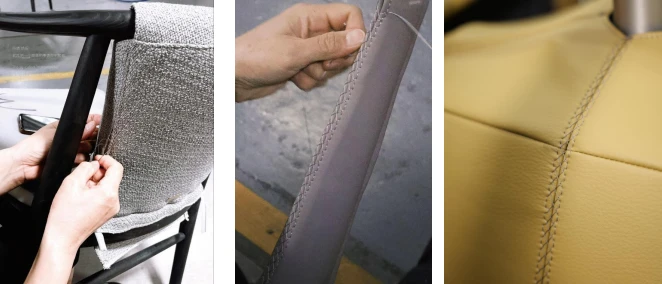
Check seams and corners in daylight. Stitching should run straight, patterns should line up, corners should be symmetrical, and there should be no loose threads.
Look at the parts nobody sees. Undersides and inner surfaces should be evenly finished, and connectors should sit solid and not loosen with use.
What the factory should be able to show you
Records of incoming material checks.
In-process inspection records from the cutting, sewing and upholstery stages.
A final inspection record before shipment, with the AQL sampling level written into your contract (ISO 2859-1 and ANSI Z1.4 are the usual references).
Choosing a Range: Proportions, Colors and Sets for Large Spaces
Minimalist furniture sells because it is easy to place. The lines are clean, the palette is neutral, and it does not fight with the rest of a room. Style appeal is broad. Size is the narrower part: our collections are designed for villas and large apartments, and for the high-end retail and repeat project channels that supply them. Bigger rooms call for generous seating and confident proportions, and in a large space, material quality and workmanship show up even more.
If you are choosing what to stock, consider:
Neutral colors: beige, gray and earth tones sell easily and rarely sit unsold in the warehouse.
Generous proportions: deep seats, wide arms and full backs give a sofa its presence.
Flexible configurations: multi-seat, corner and chaise layouts let customers fit the piece to their room.
Complete sets: pair sofas with coffee tables and side tables so your downstream customers can display and sell a full set.
If your customers mostly live in small apartments, check dimensions with us before choosing a range.
How to Choose a Sofa Manufacturer: 7 Questions for Distributors
These are the questions we would want answered if we were the buyer.
1. Is it a factory or a trading company?
Many buyers skip this. With a trading company, quality and lead time depend on a factory you cannot see, and any problem has to travel down a longer chain. Check the scope of the business license, ask for a live video walk-through rather than only a promotional video, and arrange an audit where possible. A manufacturer that owns its factory and its brand can trace an order from materials to shipment.
2. Ask what they offer and how they operate
Which collections do they have, and which fabric and color options? What are the minimum order quantity, replenishment terms, lead times, payment terms, trade terms (FOB, CIF and so on) and warranty? A good manufacturer will tell you clearly what it can and cannot do. For the record, we sell our own brand collections and do not offer OEM or ODM, which keeps us focused on the quality and consistency of our own range. No MOQ, standard lead time is 40-50 days and sample lead time is 30 days. We have warranty for 2 years.
3. Ask about quality control
Incoming material checks, in-process inspection and final inspection before shipment: who is responsible for each, and how is it recorded? Ask whether third-party pre-shipment inspection is welcome.
4. Look at packaging and shipping
Furniture is bulky and travels a long way, and containers can swing between heat and humidity on the route. Even excellent goods arrive damaged if the packing is weak. Ask about inner packing, carton strength, corner and edge protection, moisture and impact protection, and the container loading plan, including CBM per unit. Agree the packing method when you receive the quote, not after something goes wrong.
5. Check delivery reliability and communication
For a long-term partnership, steady lead times and quick, honest answers often matter as much as the product itself. You can test this during the sample stage: how fast do they reply, are the answers specific, and do they flag problems early?
6. Confirm compliance and documents
Requirements differ by market. A reliable supplier should be able to provide test reports and compliance documents, for example on timber sourcing, chemicals and fire safety. Always check the latest rules in your own market.
Not sure which collection suits your channel? Tell us about your target market and customer type, and we will suggest the ranges that fit. Email us →
What Different Export Markets Ask For
Every market has its own priorities, but in our export experience complaints tend to cluster in four areas: inconsistent quality, unreliable delivery, damaged packaging and missing documents.
The table below gives typical priorities by market. They are examples to guide your questions, not legal advice. Rules change, so confirm current requirements for your market.
|
Market |
What buyers typically focus on |
Documents and points to ask about |
|
Europe |
Material compliance, environmental credentials, sustainability paperwork |
Chemicals (REACH); fire performance (for example EN 1021, and separate furniture fire rules in the UK); timber due diligence under EU deforestation rules, so check current application dates |
|
North America |
Comfort, sizing that suits local homes, fast delivery |
Upholstered furniture flammability rules (for example California TB117-2013 and federal requirements); formaldehyde rules for composite wood; Lacey Act declarations for wood products |
|
Middle East |
Rich finishes and generous, statement-making designs |
Finish and color options, sample approval, and packing suited to long transit |
|
Australia |
Timber origin, packaging, biosecurity |
Timber legality documents; wood packaging treatment (ISPM 15) and clean-container requirements; current biosecurity rules |
Is a Higher-Quality Minimalist Sofa Worth It for Distributors?
For a distributor, quality shows up mainly as after-sales workload and repeat orders. Reliable products mean fewer returns and complaints, and satisfied end customers come back and recommend you to others. A claim costs more than a replacement sofa: freight in both directions, your team's time and your customer's trust. Saving a little on an unreliable product at the start usually costs more later than it saved.
It is a good fit if you care about long-term partnerships, want a reputation for quality, supply retail or repeat project customers, and serve medium to large living spaces.
It is probably not for you if you need private-label or custom production, your customers mostly live in small apartments, or you run short-term promotions or one-off projects. In those cases we are not the right match, and we would rather say so now than waste your time.
FAQ
What is the difference between a luxury minimalist sofa and an ordinary modern sofa?
Minimalist describes the style and luxury describes the build. The difference lies in the frame, foam density, suspension, cover and finishing, and minimalist design makes these easier to see because there is no trim to hide behind. Use the comparison table above to check them one by one.
What foam density should I ask for in a sofa?
Ask for density and hardness (ILD) in writing, with the test method. For seat cushions, high-resilience foam of roughly 35 kg/m³ or higher is a common starting point for premium sofas, depending on the feel and price tier you want. Density alone does not guarantee durability, so check it together with the suspension and frame.
Is a solid wood or engineered board frame better?
Neither label guarantees quality. Properly dried solid hardwood and good multi-layer plywood can both perform well. Drying, grade and joinery decide the result, so ask for the material, moisture control and joint method.
Is leather or fabric the better choice for a sofa?
It depends on your market and customers. Leather looks rich and, in good grades, lasts well. Performance fabric is easy to clean and suits families with children or pets. In both cases, check the leather type or the fabric test reports, because the frame and filling matter just as much.
Which test reports should a sofa supplier provide?
Typically fabric abrasion and colorfastness reports, foam test data, fire safety and chemical compliance documents for your market, and timber documents. Ask which ones apply to your market before you order.
How do I make sure bulk goods match the sample?
Approve a sample before you order, put in writing that bulk production must match it, keep a sealed reference sample, and agree how pre-shipment inspection will work.
What are your MOQ and lead times?
No MOQ, standard lead time is 40-50 days and sample lead time is 30 days. Tell us your target market and we will confirm the details for the range you are considering.
Do you offer OEM/ODM or private label?
No. We sell our own brand collections only, which lets us keep quality and delivery consistent.
Are you a factory or a trading company?
We are a manufacturer with our own brand and our own factory, shipping direct. You are welcome to arrange a video audit or visit us.
How do you handle packaging and shipping overseas?
We agree the packing method at the quotation stage, including inner packing, cartons and container loading, and we take into account any special requirements at the destination.
Next Steps
Furniture is a long-term business, and repeat orders depend on how the product performs once it is in your customer's home. When you choose a supplier, look beyond the quotation: ask to see samples, test reports and the factory itself.
Ready to work with a sofa manufacturer?
Get a Quote: tell us about your target market and sourcing needs
Request Our Catalog: see our latest minimalist collections
Book a Video Factory Tour: watch our production and quality checks live
About HUAYI SPACE. Factory-direct manufacturer of luxury minimalist sofas and furniture under our own brand, with 20 years in the industry. Factory location: No. 17th, The sixth industry Zone, Tongle, Longgang, Shenzhen, China, floor area: 6,000 sqm showroom and 60,000 sqm workshop , export markets over 50+ countries.