


The China National Furniture Association has officially released its 2025 Furniture Industry Import & Export Report. According to the report, China's furniture industry achieved a total export value of US$67.81 billion in 2025, down 5.9% year-on-year, while imports reached US$1.531 billion, a decrease of 5.4%. Despite a modest decline in total exports, China's position as a major global furniture exporter remains solid, supported by stable supply capacity. Through multidimensional structural optimization across markets, products, and regions, the industry has demonstrated strong resilience and adaptability. This is especially evident in segments such as sofa made in China, the custom sofa, and top end sofas, where international competitiveness continues to grow.
Export Markets: Asia Leads, Followed by North America and Europe
In 2025, Asia, North America, and Europe together accounted for over 80% of China's furniture exports. Asia ranked first with US$22.466 billion, or 33.1% of total exports. The top ten export destinations were the United States, the United Kingdom, Japan, Australia, Germany, Malaysia, South Korea, Canada, the Netherlands, and Singapore, accounting for 55.9% of all exports. The U.S. remained the single largest market, representing 22.7% of total exports.
Looking at three-year trends, exports to South Korea, the U.S., and Malaysia declined significantly, while exports to the U.K. and the Netherlands continued to rise. The Netherlands moved up to ninth place in 2025, marking two consecutive years of positive growth. Notably, as overseas consumers increasingly seek personalized home solutions, the custom sofa has seen export growth significantly outpacing that of conventional ready-made furniture, becoming a new growth driver.
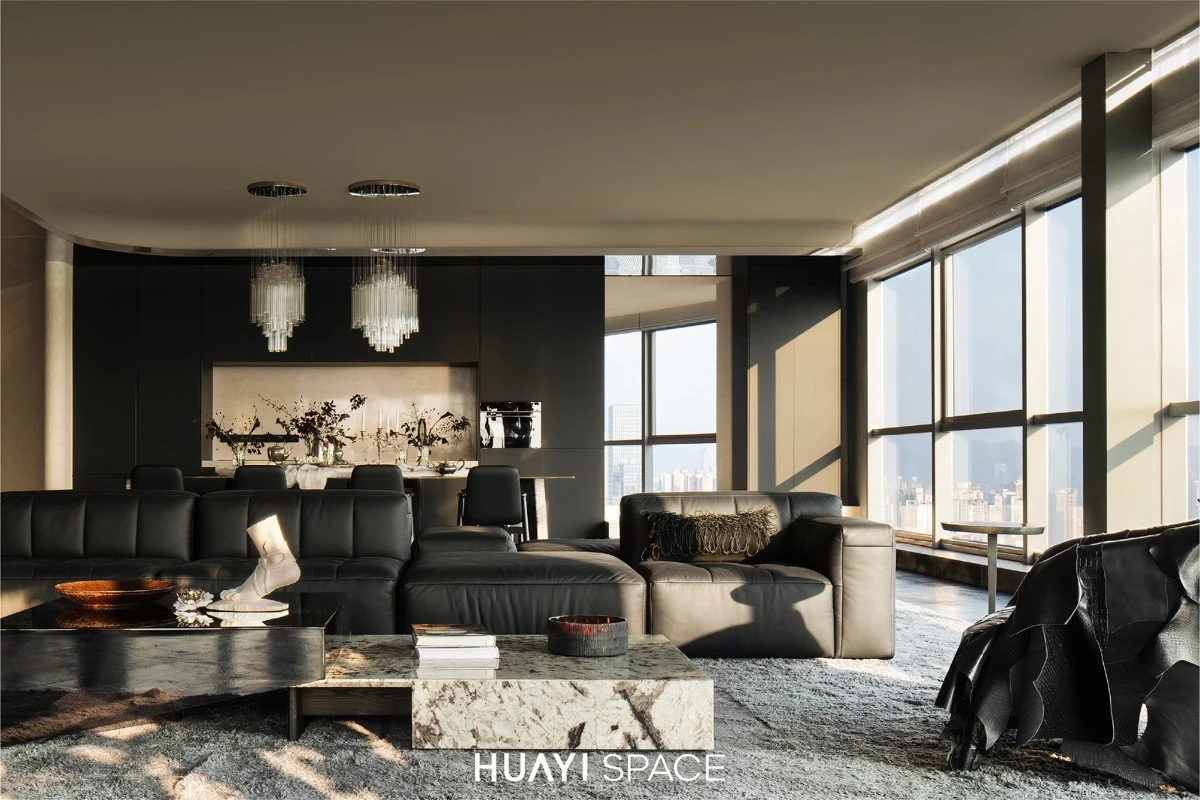
Strong Demand for High-End Categories: top end sofas and high end modern sofas Shine in Exports
The report highlights an ongoing optimization of product mix. Seating furniture, wooden furniture, and metal furniture remain the main export categories. Among them, value-added products such as top end sofas and high end modern sofas have steadily increased their share of total exports. More Chinese manufacturers are shifting from OEM to ODM and even OBM, gaining recognition in high-end markets in Europe and the U.S. through superior craftsmanship and innovative design. Meanwhile, high fashion home coffee table and western coffee table – both staples of modern Western home décor – have posted positive growth for two consecutive years, driven by their alignment with evolving lifestyle tastes.
Imports: Europe Remains the Largest Source, Premium Products Still Imported
On the import side, Europe was China's largest source of furniture imports in 2025, with US$1.06 billion, or 69.1% of total imports. Asia ranked second with US$360 million (23.5%). The top ten import sources were Italy, Germany, the U.K., the U.S., Japan, Poland, France, Thailand, Vietnam, and South Korea, together accounting for 77.9% of imports. Italy and Germany held the top two positions. Major imported categories include high end modern sofas, leather bed, and designer western coffee table.
Of particular note, leather bed – a premium bedroom furniture item – saw resilient import growth in 2025, reflecting sustained domestic demand for high-quality leather bed frames. At the same time, some leading Chinese manufacturers have begun exporting their own leather bed products, creating a two-way flow of trade.

Quarterly Performance: Q3 Was the Only Quarter with Positive Growth
Looking at quarterly trends, exports in Q1 and Q2 of 2025 fell by 8.3% and 5.2% respectively compared to the same periods in 2024. Q3 saw a year-on-year increase of 0.6%, the only quarter of positive growth for the year. Q4 exports stood at US$17.633 billion, a decline of 9.4%. On the import side, Q4 imports reached US$404 million, down 1.8% year-on-year. Although furniture imports have contracted for three consecutive years, the rate of decline narrowed in 2025, suggesting easing downward pressure.
Regional Patterns: Zhejiang and Guangdong Lead Exports, New Trade Models Gain Momentum
Domestically, Zhejiang and Guangdong remained the leading export provinces, while Shanghai, Liaoning, and Xinjiang saw notably strong export growth. These regions are home to a dense cluster of sofa made in China producers, forming a complete supply chain from raw materials to finished goods. Shanghai topped the import rankings, and Fujian, Shandong, and Henan maintained good growth. In terms of trade models, general trade remained dominant, while emerging models such as cross-border e-commerce showed strong vitality – providing efficient channels for personalized, small-batch orders of the custom sofa and high fashion home coffee table.

Outlook 2026: Accelerating Branding, Green, and High-End Transformation
The report notes that while external uncertainties will persist in 2026, China's economic fundamentals remain solid, with long-term positive conditions unchanged. As the industry stands at the strategic starting point of the 15th Five-Year Plan, China's furniture sector will continue to accelerate its transformation toward branding, green manufacturing, and high-end upgrading. Key focuses include elevating top end sofas, high end modern sofas, and leather bed through design, material, and process innovations. By leveraging cross-border e-commerce and overseas warehousing, the industry will further enhance the brand premium of sofa made in China in global high-end markets. Meanwhile, high fashion home coffee table and western coffee table will continue to integrate Eastern and Western aesthetics to explore new overseas segments.
Through multidimensional optimization of markets, trade models, product categories, and regional structures, China's furniture industry will strengthen its resilience and competitiveness in the face of external pressures, steadily raising its voice and influence in the global furniture landscape.